From a Small Garden to a Soup Pot: Making the Most of a Summer Harvest
You don’t need a big garden to grow something delicious.
What I’m Harvesting Now
Every year I tend to gravitate toward the basics in the garden, with the occasional new experiment thrown in if time allows. I always grow tomatoes – I love trying a new variety each year, and all three of my kids go crazy for cherry tomatoes. My herbs usually include basil, oregano, thyme, parsley, sage, rosemary and cilantro. Right now, I also have a few bell peppers ready to harvest, along with some grow bags full of potatoes. I pulled my garlic in July, and we snacked on my sugar snap peas in the spring, and I usually make an attempt at spinach and other leafy greens in both spring and fall. I’m also slowly getting a small strawberry patch established.
Everything that I grow - from the herbs to the garlic to the tomatoes - tastes so much better than what I can buy at the grocery store. There is nothing quite like a sun-ripened tomato pulled straight from the vine and popped into your mouth!
You Don’t Really Need Much Space
I don’t have a lot of garden space currently, partly because of the size of our backyard, partly because of the amount of sunlight we get, and partly because of the time it would take to convert more of our yard into raised beds. And yet, I still get so much joy out of the things that I do grow! Garlic has become one of my yearly staples. I love planting the cloves in late October or November, tucking them into the ground just before the soil freezes and everything disappears beneath layers of ice and snow. Then, in early spring, garlic is one of the first things to poke through the soil. I check on it almost daily while I wait for the rest of the yard to wake up from its winter slumber.
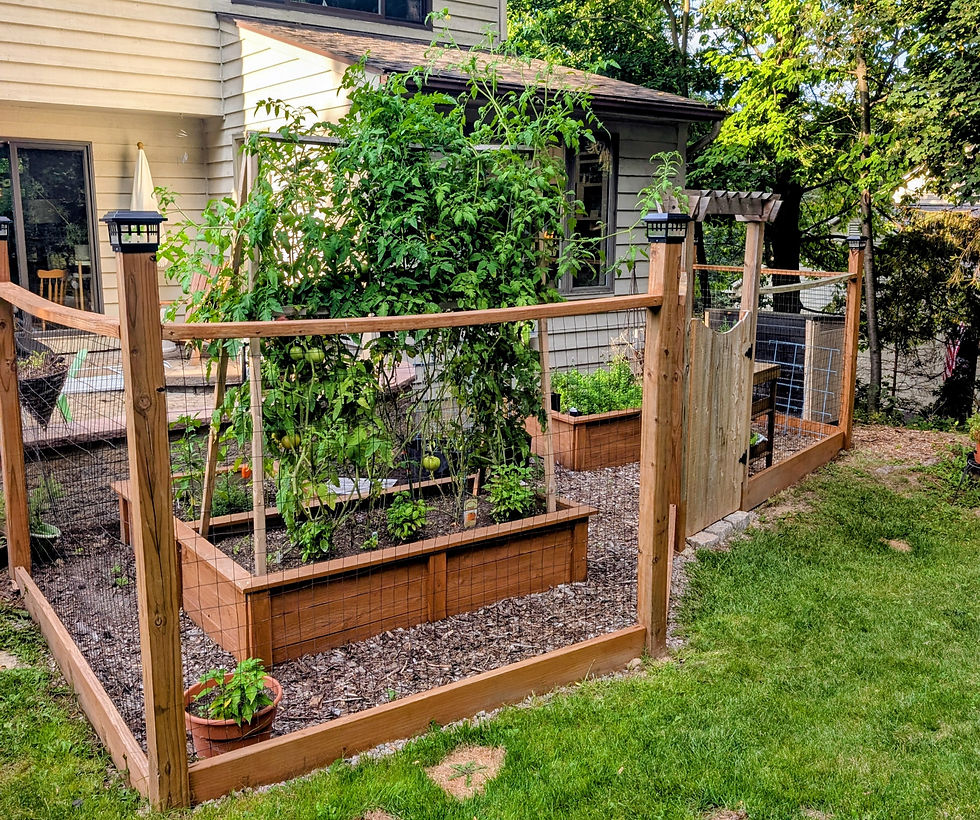
I’m going to be honest – I spend a lot of time dreaming about the acres of gardens that will one day exist at Verdant Gardens, But right now, much of my own food gardening happens in a relatively small space. And that’s part of what makes it meaningful.
If You Grow Only One Thing: Grow Herbs
Herbs are the easiest and most satisfying thing to grow! They require very little space, most are fairly low-maintenance, and they are incredibly useful when it comes time to make dinner. No more tiny plastic grocery store containers of herbs turning to mush in the refrigerator, or a giant bunch of something when you only needed two sprigs. Whenever a recipe calls for fresh herbs, I simply step outside to my garden or containers and snip exactly what I need! I truly wish that I could grow herbs outdoors all year long. They are probably my favorite thing in the garden. I do sometimes dry or
dehydrate herbs for storage, but these days, with 3 young kids, I mostly tearfully bid them goodbye when the cold weather arrives and wait to see them in the spring.

No matter where we have lived, I have always found a way to grow herbs - even on apartment windowsills. Being a gardener doesn’t mean producing all of your own food. Even growing one ingredient changes your relationship with a meal.
The Joy of Watching Dinner Grow
In many way, we’ve lost the experience of watching our food grow. In recent years, I’ve started many of my vegetable plants indoors during the winter. That means I get to watch our dinner grow from a tiny seed pressed into a small soil block in March, to a small plant hardening off outside in May, to a sprawling plant in the garden as we invent new ways to stake it up. (See the photo for this year’s attempt at a tomato trellis!)

Then comes the flowers. I watch our local bees visit and pollinate them. Tiny green tomatoes appear. Slowly, those tomatoes swell and ripen until eventually we’re picking warm, red fruit straight from the vine. That tomato in August means something completely different when I’ve been watching it grow since March. Gardening slows me down and reminds me of the joy to be found in each season. When I’m connected to the rythyms of the garden, there is almost always something to anticipate: seeds in winter, seedlings in spring, flowers in early summer, ripe tomatoes in August, garlic going into the ground in fall.
There is always something beginning.
From Garden to Tomato Soup
One of our kids’ favorite meals is tomato soup. A few times a year, we take it up a notch and make it from scratch, usually with a side of toasted crostini. It has become a family favorite. Homemade tomato soup tastes completely differently from what comes out of a can or a box, and that part of that is because the flavor changes depending on the tomatoes we decided to grow that year! Making it in August is especially satisfying because we can use the abundance of ripe tomatoes coming out of the garden, along with the garlic we harvested in July.

Fresh herbs add even more homegrown flavor. For this batch of the tomato soup and crostini, I used basil, thyme and sage straight from the garden. If I can carve out space for onions next year, we may eventually be able to grow nearly every fresh ingredient we need. For now, we pick up our onions from local farm stands – which feels like a pretty food compromise.
To make the soup, I roast the fresh ingredients together in an oven-safe pot until everything is soft, caramelized, and bubbling. Then I use an immersion blender right in the pot before adding the fresh herbs, liquids and cheese. Our tomato soup recipes are inspired by Half Baked Harvest’s Herby Tomato Soup and The Food Charlatan’s Creamy Tomato Soup. There is something deeply satisfying about sitting down to a meal and realizing just how much of it started a few steps outside your door.
Freshly picked ingredients Tomatoes, onion and garlic roasted in the oven. I use an immersion blender to blend everything up in the same pot. Adding in our liquids (creams/milks/broths). Fresh basil gets added in next. Toasting ciabatta bread with olive oil, cheese and chooped sage. The finished soup with a sprinkling of fresh basil and grated parmesean cheese.
Start Smaller Than You Think
Everywhere we’ve lived, my gardens have been fairly modest - usually around three raised beds, plus some room for containers. If you’re just starting out, a few pots of herbs and a tomato plant are plenty! You still get to experience the magic of watching your food grow. You still get to step outside with a pair of snips at dinnertime and cut a few basil leaves, grab a sprig of thyme, or gather a handful of cherry tomatoes. Dinner feels a little more intentional, and I promise the flavor comes through when something is homegrown. Starting small also gives you the chance to learn your space. Where does the sun really fall throughout the day? Which areas stay damp? Where does the afternoon shade creep in? What grows despite conditions that aren’t necessarily “perfect”?

Gardening in our very wooded yard has been a constant process of trial and error, and I’ve made some surprising discoveries along the way. When I experimented with potatoes, for example, I found that they tolerated our part-sun and dappled light conditions better than I expected. Our garlic bed receives plenty of sunlight in the spring, but by July it is shaded for much of the day. That has turned out to be just fine, because July is when we harvest – and we still end up with beautifully sized garlic! Taking things slowly, year by year, is the most sustainable option for me. I don’t feel the pressure to maintain rows and rows of garden beds while simultaneously trying to figure out what grows best in my space. Each new addition is intentional and practical, and it has to fit into the rhythm of our family’s life.
Connection Can Start Small
One of the things I hope to share through Verdant Gardens is that a connection to our food and the natural world doesn’t have to begin on acres of land.
It can begin with one pot of basil on a patio. One tomato plant beside the back door.
A handful of herbs snipped while dinner is cooking. Or one meal made with something you watched grow from seed to harvest.
You don’t have to grow all of your food to feel connected to the food you grow.


Comments